Need Information About Growing Carrots?

We have lots of answers to your questions about growing carrots. They are simple to plant, easy to fertilize and fun to harvest. They don't take up much space in the garden. Carrots can be eaten raw or steamed, sauteed, roasted or used in breads and cake. They can also be juiced and mixed with a wide variety of fruit purees for a healthy smoothie.
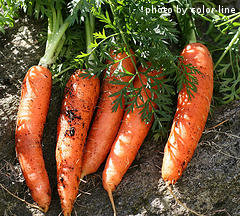
Carrots are a cool season crop that thrive when soil temperatures are about 65 degrees F. They tolerate frost very well, but require lots of sun and should be planted in well tilled soil. Most carrot varieties are ready for harvest 60-75 days after planting. Because of their short growing season and tolerance of cool weather, some folks plant two carrot crops each year - one in the spring and another in the fall. Carrots are well suited for both traditional and container gardens. They are a great way to introduce children to vegetable gardening. Kids have a great time planting the tiny seeds and they are usually amazed at the size of a carrot when they pull it out of the ground.
Because they are root vegetables, it's important that the soil is tilled deep when growing carrots. It's usually a good idea to till a couple of inches deeper than the carrots are expected to grow. It's also important that the soil be loose and airy. Carrots are more difficult to grow in dense, compact soil. However, there are smaller varieties that suited toward growing in hard, rocky soil.
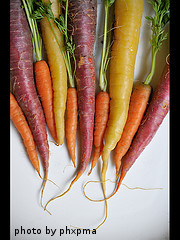
Lots of carrot varieties are available to the backyard vegetable gardener. Some folks are surprised to learn that carrots come in different shapes, colors and textures. Some varieties have a higher sugar content than others. Some carrots are round while others are long and slender.
Carrots are a great source of beta carotene, which the human body converts to vitamin A. They are also a good source of vitamins B, C, D, E and K. Some studies suggest that eating carrots regularly may help lower cholesterol.
For more information about the benefits of eating vegetables (including carrots) and other healthy food, please take a look at
www.Getting-Started-With-Healthy-Eating.com , a site that shares ideas for changing your life with healthy eating.
After harvest, extra carrots can be easily canned, frozen or dried. They will also stay fresh in your refrigerator for up to 8 weeks. In addition, they will last for months in a root cellar if properly stored. Finally, carrots can be kept in the ground over the winter, depending on your weather, as long as they are insulated from freezing temps. This is convenient as you can go out and harvest them as you need them. Whenever you do end up picking your carrots, you can chop up the tops and add them to your compost pile.
Quick Overview of Growing Carrots
Planting: Sow seeds 1/4 inch deep directly in deeply tilled soil when soil temps reach at least 55 degrees F, space rows 12-18 inches apart, sow approximately 6 seeds per in of row
Fertilizing: Apply when tops reach 3 inches tall, use fertilizer that has more phosphate and potassium and less nitrogen
Watering: Keep soil even moist but not wet, need about 1 inch of rain per week
Harvesting: Pick carrots when desired size or when tops yellow
Recipes: Carrots can be baked, roasted, fried, sauteed, boiled and eaten raw
In our own garden, we typically grow several varieties of carrots. We grow smaller, faster maturing varieties in the spring as we need to make sure they are ready to harvest before the hot summer weather sets in. We end up eating most of these carrots fresh, storing most of them in a refrigerator as we pick them. We like to stagger our planting times so that we have different varieties of carrots maturing at different times throughout the spring. This extends the number of weeks that we can harvest and eat fresh carrots.
In the fall, we typically grow larger varieties that take longer to mature. We typically store these carrots in our root cellar or leave them in the ground over the winter months, depending on how much rain we get. While we have canned and frozen carrots in the past, we typically don't do that anymore. We prefer the carrots to maintain their texture and we find that canned and frozen carrots are just a bit too much mushy for our personal taste.
Click on the following links to learn more about growing carrots.
Click here to learn about planting carrots
Click here for information about fertilizing and watering carrots
Click here to learn about harvesting and storing carrots
Click here for some of our favorite carrot recipes
Click here for information about different carrot varieties
Click here to move from our Growing Carrots main page to our Home page